
48V 15Ah Hailong Down Tube Li-ion Battery for Electric Bicycles
Multi-Buy Offer
2+ sold
In Stock (67 available)
Product Description
Why Shop With Us
You may also like
Similar products picked for you
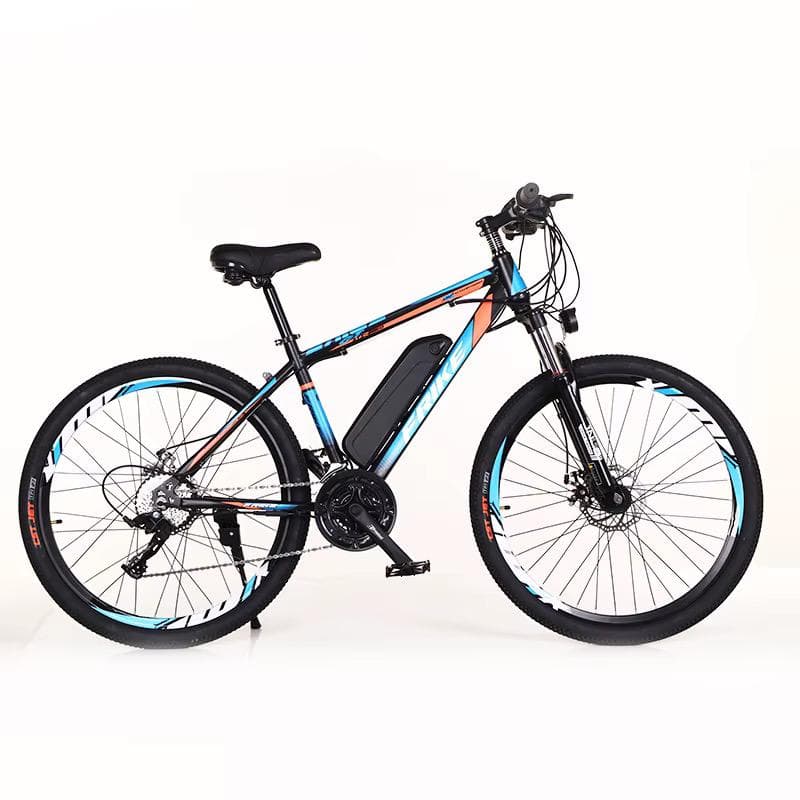
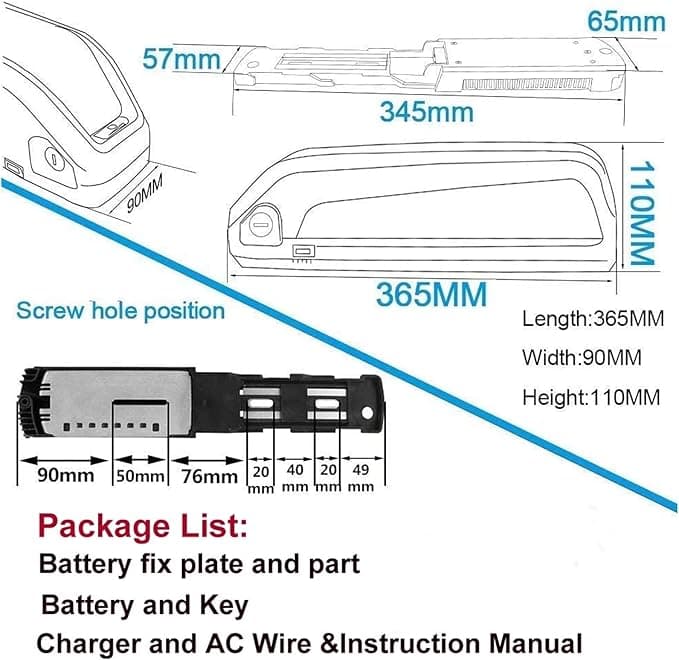
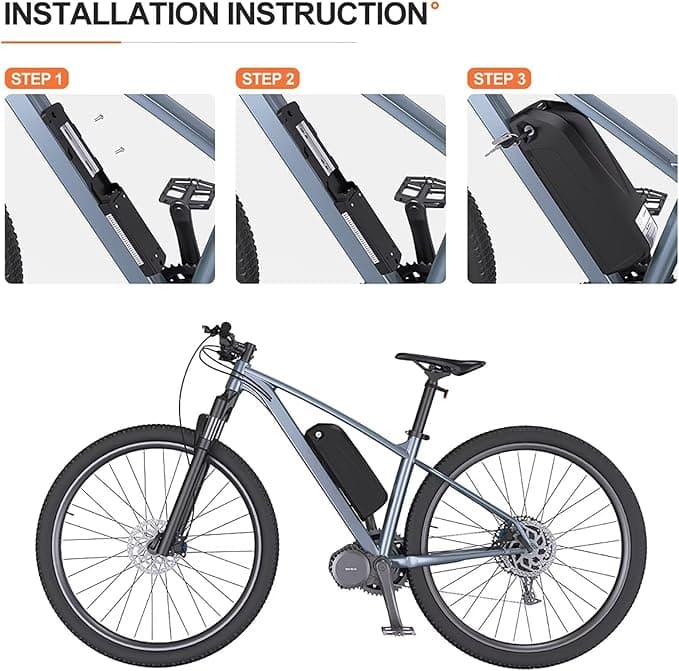
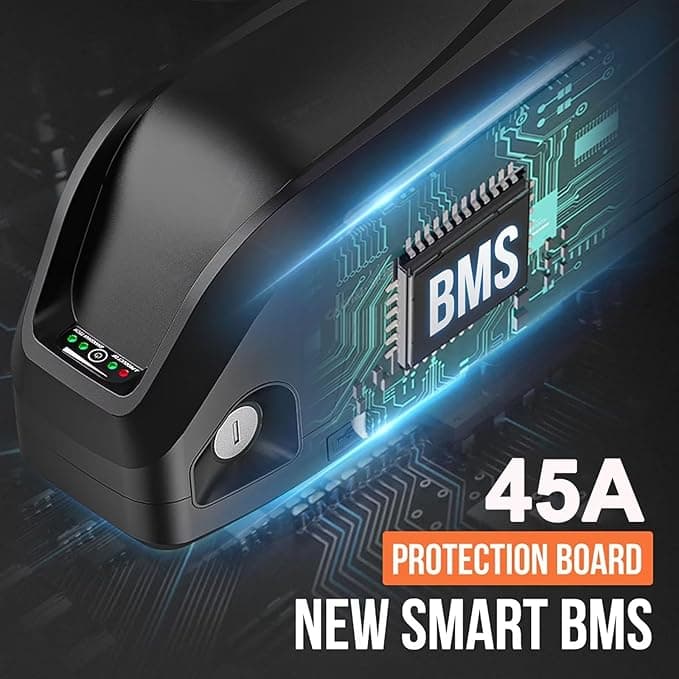
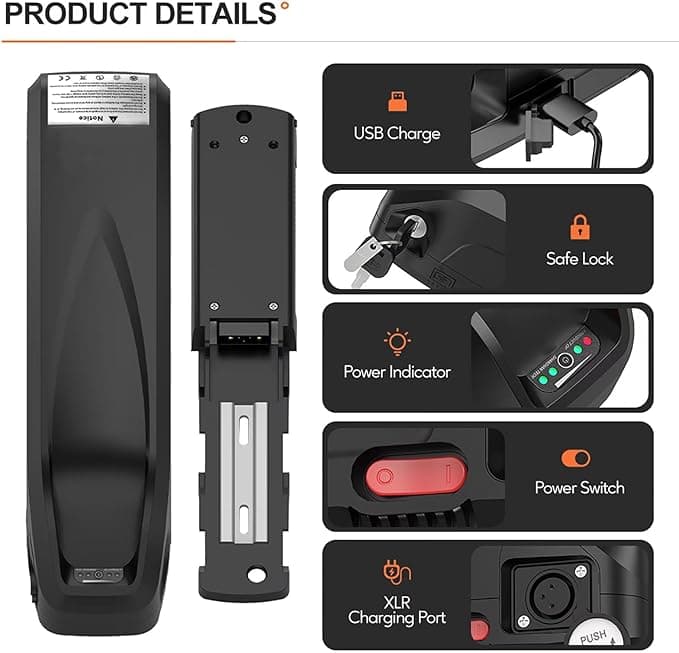


























































Looking for a 48V electric bike battery that fits a standard down tube mount? This is a 48V 15Ah lithium-ion battery built in the genuine Hailong case — the most widely used e-bike battery format — making it a straightforward replacement or upgrade for many e-bikes and conversion kits. It is stocked in the UK and qualifies for free UK delivery on orders over £50.
Below you will find everything you need before you order: how to check it fits your bike, what range to expect in real riding, and how to charge and care for it.
Technical Specifications
| Specification | Value |
|---|---|
| Nominal voltage | 48V |
| Capacity | 15Ah (15000mAh) |
| Energy | 720Wh (48V × 15Ah) |
| Chemistry | Lithium-ion |
| Battery cells | 21700 lithium-ion cells |
| BMS discharge | Up to 30A |
| Motor suitability | Suited to 250W–1000W motors |
| Case type | Genuine Hailong down tube, with lock + keys |
| Discharge connector | 4-pin base socket via included mounting rail |
| Charger output | 54.6V / 2A (charger included) |
| Full charge time | Approx. 7.5–8 hours |
| Weight | Approx. 3.3kg |
| Battery certifications | UN38.3 |
| Water resistance | Not waterproof — keep out of heavy rain |
| Application | Electric bicycles |
| Dimension | 396.5 × 121.9 × 94.3 mm, ~3.25 kg |
Every value above comes from the physical battery and charger, or is confirmed directly by the manufacturer. The energy figure is a straight calculation — 48V × 15Ah = 720Wh — so you know exactly where the number comes from.
Cells & Power
The cells are genuine EVE 18650 — EVE is a tier-1 lithium cell manufacturer, not an unbranded pack, which matters for consistency and lifespan. The battery management system (BMS) is rated 30A continuous with a 40A peak.
In practical terms that is around 1440W of continuous power (48V × 30A), so the battery comfortably suits 250W, 500W, 750W and 1000W e-bike setups. If you run a 1500W motor, it will handle short bursts, but a sustained 1500W draw sits above the continuous rating — so it is best matched to setups up to 1000W.
Will It Fit Your E-Bike?
Battery fitment comes down to three things: system voltage, physical mounting, and the connector. Check all three before ordering.
Motor and system voltage
This is a 48V battery, so your e-bike's motor and controller must be rated for 48V. Voltage must always match — a 48V battery should never be fitted to a 36V-only system.
If you run a high-power motor or a high-current controller, contact us before ordering and we will help you check the battery is a sensible match for your setup.
Frame and mounting
The battery uses the genuine Hailong down tube case, one of the most common formats on e-bikes and conversion kits, and the matching mounting rail is included in the box. The rail fixes to the frame's down tube, usually using the bottle-cage bosses, and the battery slides on and locks with the included keys.
Before you buy, check the space inside your frame triangle. Down tube batteries need clearance along the tube to slide on and off the mount — measure your available space, and if you are unsure, send us a photo of your bike and we will help you check.
Connector
The battery discharges through a 4-pin socket in its base, with the polarity marked on the housing. It connects automatically as the battery slides onto the included mounting rail — there is no separate discharge cable to plug in. If you are replacing an existing Hailong base-discharge battery, the mounting and connection work the same way. Unsure? Send us a photo of your current battery's base and mount, and we will confirm the match before you order.
Upgrading from 36V?
Many riders move from 36V to 48V for more performance. Two things to know:
First, your controller must support 48V. Some controllers (such as dual-voltage KT models) accept both 36V and 48V; many are single-voltage only. Check your controller's rating before upgrading — if it is 36V-only, a 48V battery is not compatible.
Second, what actually changes: a 48V system runs the motor at a higher voltage than 36V, which raises both the motor's speed and its torque. Riders upgrading from 36V typically notice stronger hill climbing and quicker acceleration.
Real-World Range
Range claims on battery listings are often optimistic. Here is an honest way to estimate what this battery will do for you.
Take the battery's energy — 720Wh — and divide it by how much energy your riding consumes per kilometre:
- Light pedal assist on flat terrain typically uses around 6–8Wh per km
- Mixed riding with moderate assist typically uses around 10–15Wh per km
- Heavy assist, hills, or heavier loads can use 20Wh per km or more
On that basis, 720Wh gives roughly 50–70km of mixed riding, stretching towards 90–120km with light assist on flat routes, or noticeably less with heavy assist on hilly UK roads.
Your actual range depends on rider weight, terrain, tyre pressure, temperature and assist level — treat these figures as a guide, not a promise.
Charging
A matching charger is included in the box. It outputs 54.6V at 2A, and a full charge from empty takes around 7.5–8 hours — an overnight-style routine or charging after work covers most riders easily.
Always charge a 48V battery with a charger designed for it. A 48V lithium-ion battery charges to 54.6V when full. Never use a 52V (58.8V) or any other mismatched charger — using the wrong charger can damage the battery and is a safety risk.
Basic charging practice:
- Charge indoors, at room temperature, on a hard surface — the charger is for indoor use only
- Use only the correct, undamaged charger
- Do not charge below 0°C; let a cold battery come up to room temperature first
- Do not charge a battery that is damaged, swollen or has been in a crash
Battery Care & Winter Storage
The battery's own label sets two rules: store it in a cool, dry place, and give it a full charge at least every 60 days when not in use. Alongside that, standard lithium-ion practice will keep it healthy for years:
- Avoid leaving the battery at 100% or near-empty for long periods between rides
- Store it indoors — not in a shed or garage through freezing weather
- Keep the contacts clean and dry
- This battery is not waterproof: never submerge it, keep it out of drenching rain, and remove or cover it when washing the bike — never use a pressure hose
Safety & Certifications
The battery carries CE, RoHS and UN38.3 markings on its label. UN38.3 is the United Nations transport test standard for lithium batteries — it means the pack design has passed the tests required for batteries to be shipped safely.
Use the correct charger, keep the battery away from extreme heat, and stop using any battery that shows damage, swelling or unusual smells. Do not open the casing.
E-bike batteries must never go in household waste. When this battery reaches the end of its life, take it to a battery recycling point — most household waste recycling centres in the UK accept e-bike batteries.
What's Included
- 1 × 48V 15Ah battery
- 1 × 54.6V 2A charger
- 1 × discharge connector (4-pin mounting rail)
- 2 × keys
No printed manual is included — this page covers fitting, charging and care, and we are a message away if you need help.
Frequently Asked Questions
Will this battery fit my e-bike?
It fits e-bikes with a 48V system and a Hailong down tube mount — the mounting rail is included. Check three things: your system is 48V, your frame has clearance for a down tube battery, and your current battery (if replacing) is a Hailong base-discharge type. If you are unsure, contact us with a photo of your current battery and mount.
Can I upgrade my 36V e-bike to 48V with this battery?
Only if your controller supports 48V. Dual-voltage controllers (such as many KT models) accept both; single-voltage 36V controllers do not. Check your controller's rating first — this is the single most important compatibility check when upgrading.
Will 48V make my bike faster or give more torque?
Both. Running a motor at 48V instead of 36V raises the voltage by around a third, which increases both motor speed and torque. Riders upgrading from 36V typically notice stronger hill climbing and quicker acceleration.
How far will it go on one charge?
As a guide: roughly 50–70km of mixed riding, up to 90–120km with light assist on flat terrain, or less with heavy assist and hills. See the Real-World Range section above for the maths behind these figures.
What is the full charge voltage of a 48V battery?
54.6V. "48V" is the nominal voltage; a healthy 48V lithium-ion battery reads about 54.6V straight off the charger and settles as you ride.
Can I use a 52V charger on this battery?
No. A 52V charger outputs 58.8V, which is too high for a 48V battery. Only use a charger designed for 48V (54.6V output). Using a mismatched charger can damage the battery and is a safety risk.
How should I store it over winter?
Indoors, cool and dry — and follow the label rule: give it a full charge at least every 60 days. Avoid leaving it sitting at completely full or completely empty for months, and never charge it below freezing.
Is a charger included?
Yes. The box includes a matching 54.6V 2A charger along with the battery, the mounting rail and two keys — nothing extra to buy before your first ride.
How long does charging take?
A full charge from empty takes around 7.5–8 hours with the included 2A charger (15Ah ÷ 2A). Partial top-ups are proportionally quicker.
What motors is it compatible with?
The manufacturer lists this battery family for 48V motors in the 250W–750W range. Your system must be 48V — voltage must always match. For motors outside that range, check your controller's current draw against the battery's 10A standard / 30A maximum discharge rating, or contact us to check.
Is the battery water proof?
No. The manufacturer's label instructs: never submerge it and keep it out of drenching rain. Remove or cover the battery when washing the bike, never use a pressure hose on it, and store it indoors.
Can I use this as a 12V battery for a campervan or caravan?
No — it is designed for electric bikes only. It is a 48V pack, so it cannot be charged from a 12V split-charge system, solar controller or leisure charger, and its charger is mains-powered and indoor-only. For campervan power, a dedicated 12V leisure battery is the right tool.
What cells and BMS does this battery use?
This pack uses 21700 lithium-ion cells — 39 of them, in a 13S3P arrangement — with a BMS rated up to 30A maximum discharge. The 21700 format holds more capacity per cell than the smaller 18650 cells found in many budget packs. We don't hold manufacturer paperwork naming the exact cell brand, so we don't claim one — we only state what we can verify from the unit and its test report.